
Tote vs Fixed Odds: Pool Betting or Bookmaker Prices for Horse Racing
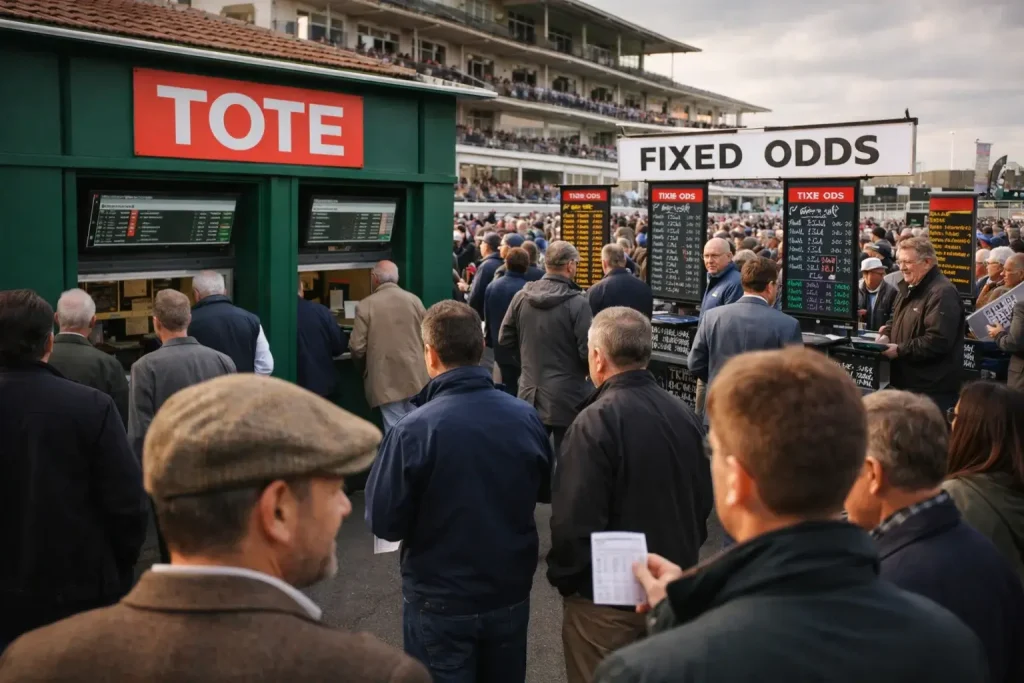
Tote vs fixed odds represents a fundamental choice between two entirely different betting systems. With fixed odds, you lock in a price at the moment of betting – what you see is what you get, regardless of subsequent market movements. With Tote pool betting, you contribute to a collective pot that is divided among winners after the race, meaning your exact return remains unknown until the dividend is declared.
The distinction matters because each system offers different advantages in different circumstances. Fixed odds provide certainty and enable strategic timing around price movements. Tote pools can deliver outsized returns on overlooked horses when public money floods toward favourites. Understanding when each approach makes sense improves your betting outcomes across the full range of UK racing.
British racing operates both systems in parallel, giving punters genuine choice. The Tote, now operated by UK Tote Group following privatisation, runs pool betting at all UK racecourses and through online platforms. Fixed odds bookmakers compete alongside, offering their traditional price-based markets. The two systems interact in interesting ways – Tote dividends often differ substantially from SP, sometimes favouring pool bettors and sometimes favouring bookmaker customers.
This comparison examines both systems thoroughly. We explain how pool betting mechanics work and how dividends are calculated from the money staked. The Tote’s current structure in UK racing receives detailed treatment, including World Pool’s international liquidity expansion. We identify scenarios where Tote consistently beats fixed odds and vice versa. Racing’s funding through the Levy system connects your betting choices to the sport’s financial health. Know where your money goes – and understand which system serves your interests in each betting situation.
How Pool Betting Works
Pool betting, also called parimutuel betting, operates on a fundamentally different principle from fixed odds. Instead of betting against a bookmaker at predetermined prices, you bet into a pool alongside other punters. All money staked goes into that pool. After the race, the pool is divided among winning bettors proportionally to their stakes, minus the operator’s deduction.
The mechanics unfold in stages. First, punters place bets on their selections before the race. Each bet increases the pool size. There is no fixed odds moment – no price locks in at bet placement. Second, after betting closes, the operator removes their deduction percentage from the total pool. Third, the remaining money is divided by the total amount staked on the winning selection. This calculation produces the dividend – effectively the odds paid to winning bettors.
Consider a simplified example. A Tote win pool totals £10,000 across all runners. The operator’s deduction is 15%, leaving £8,500 for distribution. The winning horse attracted £1,000 in stakes from various bettors. The dividend calculation: £8,500 ÷ £1,000 = 8.5. Each winning £1 stake returns £8.50 total – the original stake plus £7.50 profit. This works out equivalent to 7.5/1 in fractional odds, or 8.50 in decimal.
The critical insight is that your return depends on what others bet, not on a price you accepted when placing your wager. If that same £10,000 pool saw £2,000 staked on the eventual winner instead of £1,000, the dividend would halve: £8,500 ÷ £2,000 = 4.25, equivalent to roughly 13/4. More money on the winner means smaller returns for each winning bettor.
This dynamic creates opportunities and risks. When the betting public heavily backs a favourite, money concentrates on that selection, potentially depressing its pool dividend below equivalent fixed odds. Conversely, when an outsider wins, limited pool money on that horse means the remaining pool distributes among few winning bets, often producing dividends exceeding available fixed odds.
The operator’s deduction – typically called the deduction or vig – varies by pool type and jurisdiction. According to industry analysis, the Tote’s average margin runs around 6.3%, comparable to competitive fixed odds bookmakers. Different pool types carry different deductions: simple win pools typically have lower deductions than exotic bets like Trifectas, where complexity justifies higher operator margins.
Pool size affects dividend reliability. Small pools with concentrated betting can produce volatile dividends that swing dramatically based on late money. Large pools with diverse betting produce more stable dividends that better reflect true probability. This explains why World Pool’s international liquidity matters – bigger pools mean more accurate pricing and more predictable returns for punters.
Unlike fixed odds, pool bets never close until race time. You can place a Tote bet in the morning, but your dividend is not determined until the pool closes at the off. Late money can improve or worsen your expected return without you having any control. This uncertainty is the trade-off for pool betting’s potential to outperform fixed odds on under-bet selections.
The Tote in UK Racing
The Tote has operated pool betting on British racing since 1928, when the Racecourse Betting Act established the Horserace Totalisator Board to run legal pool betting at racecourses. For decades, the Tote held a monopoly on pool betting in Britain, with proceeds supporting racing through the Levy system and direct contributions.
Privatisation in 2011 transferred the Tote to Betfred under a seven-year licence. Following that period, a consortium of racing industry investors formed UK Tote Group and acquired the operation in 2019. The current structure sees the Tote operated by interests aligned with British racing’s long-term health, with commercial arrangements returning substantial funds to the sport.
The Tote offers multiple pool bet types beyond simple win betting. The Tote Place pool pays dividends on horses finishing in place positions, typically first and second in smaller fields or first, second, and third in larger races. Exacta requires picking the first two finishers in correct order. Trifecta extends this to the first three. Placepot, one of the Tote’s most popular pools, requires selecting a placed horse in each of the first six races at a meeting. Jackpot and Scoop6 offer accumulator-style pools with substantial prize funds.
Tote betting is available both on-course and online. At racecourses, Tote windows operate alongside traditional bookmakers. Online, the Tote operates through its own platform and through integration with various bookmaker sites. This accessibility means punters can compare Tote pool estimates with fixed odds before choosing their approach for each race.
The Tote Guarantee provides protection on short-priced winners. If the win dividend falls below SP on horses starting at odds of 4/1 or shorter, the Tote pays SP instead. This guarantee eliminates the risk that heavy pool betting on a favourite produces a dividend worse than readily available fixed odds. For punters backing shorter-priced horses through the Tote, the guarantee provides meaningful reassurance.
UK Tote Group has returned significant funds to racing since acquiring the operation. According to UK Tote Group, the Tote has contributed more than £60 million to British racing through commercial agreements with racecourses since 2019. These contributions fund prize money, racecourse infrastructure, and the broader ecosystem that makes British racing possible. For punters who value the sport’s sustainability, knowing that Tote betting directly supports racing adds intangible value beyond pure return comparison.
The Tote’s position in UK racing continues evolving as betting markets fragment and competition intensifies. Its survival and growth depend on offering genuine value versus fixed odds alternatives while maintaining the pools that make parimutuel betting viable. Current indications suggest the model remains healthy, but punters should monitor Tote developments as part of informed betting strategy.
World Pool Explained
World Pool represents the Tote’s most significant innovation in recent years. By connecting UK pool betting with international parimutuel markets – particularly the massive Hong Kong Jockey Club pools – World Pool dramatically increases liquidity on selected British races. Bigger pools mean more accurate pricing and more stable dividends, addressing one of traditional Tote betting’s key weaknesses.
The mechanics combine betting from multiple jurisdictions into unified pools for specific races. When World Pool operates on a British feature race, stakes from Hong Kong, Australia, Korea, Singapore, and other participating countries flow into the same pool as UK bets. The resulting pool size dwarfs anything achievable from UK betting alone, with World Pool races often generating pools in the tens of millions.
Coverage focuses on premium British racing. Major festivals – Royal Ascot, Cheltenham, the Derby meeting at Epsom, Glorious Goodwood – feature extensive World Pool coverage. Big Saturday cards with Group races typically qualify. Everyday racing at smaller meetings does not receive World Pool treatment. The selectivity reflects both operational logistics and the need for genuine international interest to justify pool integration.
The numbers demonstrate World Pool’s impact on British racing finances. According to UK Tote Group, World Pool has returned more than £65 million to British and Irish racing since its 2019 launch. Daily revenue on World Pool days can reach £500,000 to £800,000, according to industry reporting. These figures dwarf traditional domestic pool revenues, illustrating how international integration transforms the economics of pool betting.
For punters, World Pool offers distinct advantages on covered races. Pool size reduces dividend volatility – late money has proportionally less impact on enormous pools than on small domestic pools. Liquidity enables meaningful bets without moving the market, relevant for punters who stake substantial sums. The accuracy of very large pools means dividends tend to reflect true probability rather than local betting quirks.
World Pool performance versus fixed odds varies by outcome. Favourites often pay smaller dividends through World Pool because international bettors, particularly from Hong Kong, tend toward popular selections. However, when outsiders win, World Pool regularly outperforms fixed odds significantly because limited money on long shots divides among few winners. The comparative advantage depends on your selection profile.
Exotic pools benefit particularly from World Pool liquidity. UK-only Exacta and Trifecta pools sometimes produce erratic dividends due to limited participation. World Pool exotics draw on international stakes, producing more rational pricing and more meaningful payouts on sophisticated combination bets. Punters who favour exotic bet types should prioritise World Pool races where liquidity makes these markets viable.
Timing matters when betting into World Pool. Pools continue accepting bets until race time, and late international money can substantially alter dividends. Live dividend estimates help, but final payouts may differ. Accept this uncertainty as inherent to pool betting – World Pool reduces volatility compared to domestic pools but cannot eliminate it entirely.
When Tote Beats Fixed Odds
Tote pool betting outperforms fixed odds bookmakers in identifiable circumstances. Understanding these scenarios allows you to select the appropriate system for each race rather than defaulting to one approach regardless of conditions.
Outsiders winning competitive races represents the clearest Tote advantage. When public money concentrates on favourites and near-favourites, pool dividends on longer-priced horses often exceed available fixed odds. The mathematics work because limited stakes on the winning outsider divide a pool swelled by losing bets on popular selections. These scenarios produce dividends of 30/1, 40/1, or higher when bookmaker SP settled at 20/1.
The data supports this pattern. According to analysis of World Pool races, Tote win dividends beat SP in approximately 72% of races on World Pool days. This advantage concentrates in races with winning outsiders, where Tote’s percentage superiority over SP can reach double digits.
Large-field handicaps suit Tote betting particularly well. Spread betting across many runners in these races often leaves individual horses under-bet relative to their chances. The Tote dividend reflects this under-betting, paying generous returns when unfancied horses outrun expectations. Big handicaps at major festivals – the Cambridgeshire, the Cesarewitch, the Grand National – regularly see Tote dividends exceeding SP on winning outsiders.
Exotic bet types deliver stronger value through Tote pools than through fixed odds equivalents. Exacta and Trifecta pools distribute money among winners regardless of bookmaker pricing structures. When unusual combinations land, pool dividends can massively exceed bookmaker payouts on forecast and tricast bets. The Scoop6 and Placepot offer accumulator-style challenges unavailable in fixed odds format, with jackpot rollovers creating prize pools that far exceed conventional accumulator returns.
Tote Guarantee protects against the main downside of pool betting on favourites. Horses starting at 4/1 or shorter automatically receive SP if the pool dividend falls below that figure. This guarantee means backing short-priced selections through the Tote cannot produce worse returns than taking SP with a bookmaker. The upside possibility of a superior dividend comes with protected downside.
Value perception differs between systems in important ways. Fixed odds require assessing whether a price represents value before betting. Pool betting shifts that assessment to outcomes – the pool dividend depends on how others bet, not on your own price judgement. For punters confident in selections but uncertain about price efficiency, pool betting outsources the pricing decision to collective market action.
Know where your money goes when choosing Tote over fixed odds. Pool betting supports racing directly through Tote contributions and World Pool revenue shares. While bookmaker Levy payments also fund racing, the connection feels more direct when betting into pools operated by racing-aligned interests.
When Fixed Odds Beat Tote
Fixed odds bookmakers offer distinct advantages in scenarios where certainty and strategic timing matter. Recognising when fixed odds outperform Tote pools optimises your approach across diverse racing conditions.
Price certainty represents the fundamental fixed odds advantage. When you accept odds, you know your potential return before the race. No late money can erode your payout. No pool dynamics can disappoint you with an underwhelming dividend. This certainty enables precise bankroll management, meaningful comparison shopping across bookmakers, and confident stake sizing based on known outcomes.
Best Odds Guaranteed amplifies fixed odds benefits substantially. BOG protection means you receive either your locked-in odds or SP, whichever is higher. Tote betting offers no equivalent guarantee on drifters – if you bet into a pool and the horse drifts, your dividend reflects final pool composition regardless of earlier pricing. The asymmetric protection of BOG makes fixed odds preferable when prices might move either direction.
Short-priced horses frequently return better dividends through fixed odds than through Tote pools. When heavy favourite backing inflates pool money on popular horses, dividends often fall below SP. The Tote Guarantee addresses this on horses at 4/1 or shorter, but the guarantee only ensures SP equivalence, not superiority. If BOG offers potential for enhanced fixed odds on favourites, the bookmaker route may produce better expected value.
Smaller meetings with limited Tote turnover produce volatile pools that serve punters poorly. Without meaningful pool size, individual bets can swing dividends dramatically. Late money has disproportionate impact. Dividend estimates become unreliable. At these less-attended fixtures, fixed odds provide the predictability that thin pools cannot match.
Early betting requires fixed odds because Tote pools have not formed. Punters who wish to secure prices hours before racing, whether to capture expected shorteners or simply due to schedule constraints, must use fixed odds. Tote bets placed early remain at risk of dividend deterioration right up until race time, whereas fixed odds lock in regardless of subsequent market evolution.
Each-way betting works more transparently through fixed odds. While the Tote offers Place pools, the fixed odds each-way structure with defined place terms and fractional place odds offers clearer calculation and comparison. Punters who rely on each-way value identification and place overlay hunting find fixed odds markets easier to analyse than Tote Place pool dynamics.
Strategic punters often combine systems – fixed odds for shorter prices and certain conditions, Tote for long shots and liquid pools where dividends may exceed SP. Rigid commitment to either system leaves value on the table that flexible punters capture.
Levy and Racing Funding
British racing’s financial structure connects your betting choices to the sport’s sustainability. Understanding how the Horserace Betting Levy Board, bookmaker contributions, and Tote payments fund racing illuminates the broader context of the Tote vs fixed odds decision.
The Levy system requires bookmakers to pay 10% of their gross gambling yield on British racing to the HBLB. This percentage, applied to bookmaker profits rather than turnover, provides racing’s primary funding stream from betting activity. The Levy then distributes these funds across prize money, racecourse improvements, veterinary services, and other racing infrastructure.
The Levy’s real-world impact is substantial but represents a relatively small slice of betting turnover. According to Trainer Magazine analysis, the Levy equates to approximately 0.7% of total betting turnover on British racing – one of the lowest returns from betting to racing of any major racing nation. France, by comparison, returns significantly more through its PMU monopoly, while Hong Kong’s model produces returns that dwarf the British figure.
Despite the low percentage, absolute Levy income has grown recently. “Levy yield for the 12 months to 31 March 2026 reached almost £109 million, the fourth successive year of increase and the highest since the Levy collection reforms of 2017,” noted Alan Delmonte, Chief Executive of the HBLB. This record Levy income reflects bookmaker profitability improvements rather than betting turnover growth – a crucial distinction as overall turnover has actually declined.
Tote betting contributes to racing through different mechanisms. UK Tote Group’s commercial arrangements with racecourses return funds directly to venues. World Pool revenue shares bring international money into British racing. These contributions sit outside the Levy system but supplement its funding. For punters who value racing’s health, knowing that both betting routes ultimately support the sport provides reassurance.
The tension between Levy sustainability and betting market trends deserves attention. Declining turnover, driven partly by regulatory constraints and affordability checks, threatens future Levy income even as recent years have seen record yields. The HBLB’s caution about sustainability reflects this paradox – current income is strong, but the underlying trends point downward.
Your individual betting choices have negligible direct impact on racing funding, but collectively punter behaviour shapes the industry’s economics. Whether you prefer Tote or fixed odds, your bets contribute to the ecosystem that makes British racing possible. Know where your money goes, and appreciate that racing’s future depends partly on continued betting engagement.
On-Course Pool Betting
Racecourse attendance offers direct access to Tote betting through on-course windows and terminals. The experience differs from online pool betting in several ways that affect both convenience and potential returns.
Britbet operates pool betting across numerous UK racecourses following agreements with Arena Racing Company and other venue operators. According to Britbet, on-course pool betting turnover at participating courses reached £73.6 million in 2026, representing a 26% increase compared to 2018 figures. This growth demonstrates sustained appetite for pool betting among racegoers despite the expansion of mobile betting alternatives.
On-course Tote windows provide straightforward access for cash bettors. Queue, state your selection and stake, receive a ticket. Settlement occurs at the same windows after races conclude, with winning dividends paid immediately. For punters uncomfortable with apps or accounts, on-course windows maintain accessible betting without technological barriers.
Self-service terminals offer faster transactions and avoid queue delays during peak betting periods before feature races. These machines accept cards and cash, print tickets, and often display live dividend estimates. Familiarity with terminal operation reduces pre-race stress when placing bets close to the off.
Pool betting at the track connects to the same pools available online – on-course stakes contribute to overall Tote pools including World Pool where applicable. Your on-course bet affects and is affected by online betting activity. There is no separate on-course pool with distinct dividends; the integration is complete.
Advantages of on-course betting include avoiding mobile signal issues common at busy racecourses, eliminating minimum stake requirements some online platforms impose, and the visceral experience of holding a physical ticket while watching your horse run. The atmospheric value of betting at the track complements the practical calculation of odds and dividends.
For serious punters, combining on-course betting with mobile access optimises flexibility. Check fixed odds prices on your phone, compare against Tote dividend estimates, then use whichever approach offers better value for each race. The racecourse environment enables this comparison shopping across systems that serves value-seeking punters well.
Whether you bet on-course or online, the Tote experience ultimately comes down to pool dynamics and dividend outcomes. The venue changes the atmosphere but not the mathematics.
Tote vs fixed odds is not a binary choice but a strategic decision varying by circumstance. Pool betting suits long shots, large fields, and World Pool races where dividends frequently exceed SP. Fixed odds suit short prices, early betting, and situations where price certainty matters. Optimal betting strategy deploys each system where it performs best.
The framework guides your decisions. For favourites and near-favourites, take fixed odds with BOG protection. For outsiders in competitive handicaps, consider Tote pools where dividends often outperform. For exotic bets at major meetings, World Pool liquidity produces rational dividends that justify participation. For everyday racing at smaller tracks, fixed odds certainty typically beats thin pool volatility.
Know where your money goes. Both systems ultimately support British racing through Levy contributions and Tote revenue shares. Your betting choices shape the industry’s economics while your selection quality determines your personal outcomes. Use the right tool for each job, and racing rewards punters who understand its parallel betting systems.