
UK Fixed Odds Horse Racing: Top Bookmakers and Betting Value
 Available in US
Master fixed odds betting on UK horse racing with data-driven insights into odds mechanics, BOG, Rule 4 and winning strategies.
Lock your price. Know your payout. Win smarter.
Fixed odds horse racing is the dominant form of betting in Britain, and for good reason. When you take a price with a bookmaker, that number is yours regardless of what happens in the market between your bet and the off. The horse you backed at 10/1 on Tuesday morning will pay 10/1 if it wins on Saturday afternoon, even if the starting price drifts to 16/1 or crashes to 5/1. This certainty sits at the heart of why millions of British punters prefer fixed odds to pool betting or starting price wagers.
The UK horse racing betting market generates approximately £5 billion in annual turnover, making it the second largest in Europe after France. This vast ecosystem of bookmakers, exchanges and pool operators gives British punters more ways to bet on horses than almost anywhere else on Earth. Yet fixed odds remain the preferred choice for most, with the remote betting sector alone delivering £766.7 million in gross gaming yield from horse racing in the twelve months to March 2025, according to the UK Gambling Commission.
Understanding fixed odds matters whether you place one bet a year at Cheltenham or study form sheets every morning before work. The mechanics are straightforward, but the strategic implications run deeper than most beginners realise. Knowing when to lock in a price versus waiting for the starting price can mean the difference between a profitable year and a losing one. Throw in each-way calculations, Rule 4 deductions and the Best Odds Guaranteed promotions that most major bookmakers offer, and there is plenty to master.
This guide covers the complete landscape of fixed odds betting on British racing. We will explain how prices are formed, when they offer value compared to alternatives like the Tote or betting exchanges, and how to protect yourself against the inevitable complications of withdrawals and market movements. Whether you are trying to understand why your payout was smaller than expected or looking to sharpen your edge against the bookmakers, the answers are here.
UK Fixed Odds Betting: Payouts and Market Comparison 2026
- Fixed odds lock your price at the moment of betting, protecting you when horses shorten but leaving potential gains on the table when they drift.
- Best Odds Guaranteed eliminates this trade-off on race-day bets by paying whichever is higher, your fixed price or the SP.
- Rule 4 deductions reduce your winnings when a horse withdraws, with cuts ranging from 5p to 90p in the pound depending on the non-runner's odds.
- Betfair SP beats the traditional Industry SP in 97.5% of races, making exchanges worth considering if you prefer waiting for the off.
- The UK market saw betting turnover fall 10.3% between 2023 and 2025, meaning competitive odds and promotions remain fierce among bookmakers fighting for punter loyalty.
How Fixed Odds Work: The Mechanics of Locking Your Price
The principle behind fixed odds is elegantly simple. You see a price, you take it, and that price becomes contractually binding between you and the bookmaker. If you back a horse at 8/1 and it wins, you receive eight times your stake plus your stake back. The official starting price could be 4/1, 12/1 or anywhere in between, but your payout remains anchored to that 8/1 you accepted.
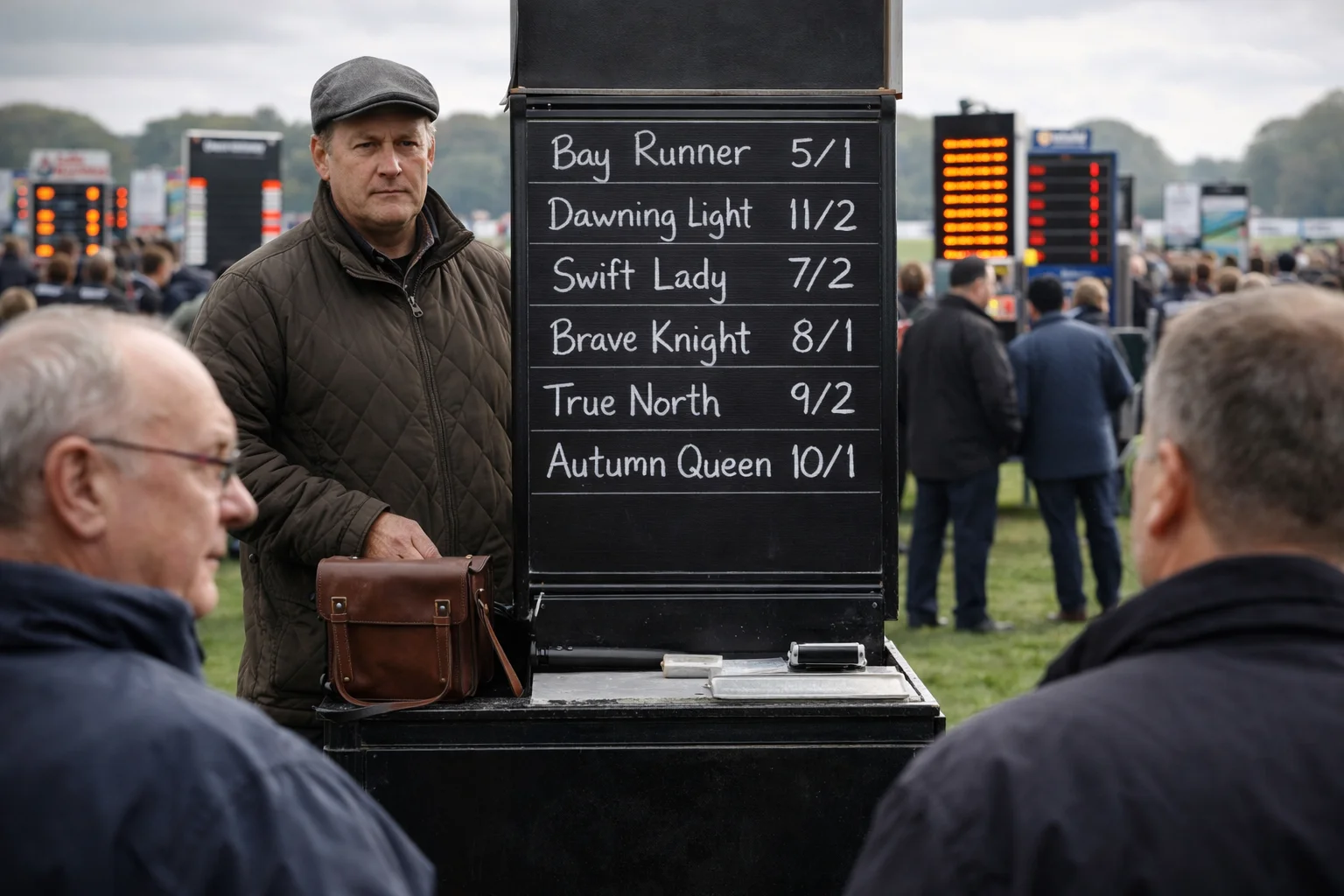
Fixed Odds — a betting price that is agreed at the time of placing the wager, remaining unchanged regardless of subsequent market movements or the official starting price.
Bookmakers begin forming their markets hours or even days before a race. For everyday racing, early prices typically emerge on the morning of the race, often between 8am and 10am. These morning prices combine form analysis, market intelligence and the built-in overround margin that ensures bookmaker profit over time. A typical horse racing market might have an overround of 115-125%, meaning if you backed every horse at the quoted prices, you would theoretically lose 15-25% of your total stake.
When you lock in your odds, you freeze a moment in this constantly shifting market. The price you see at 9am reflects all the information processed up to that point. By 2pm, new intelligence might have compressed a 10/1 shot to 6/1. If you took the 10/1, you hold an advantage over someone who waited.
Calculating a Fixed Odds Return
You back Desert Crown at 5/1 with a £10 stake.
The fraction 5/1 means for every £1 you stake, you receive £5 in winnings if successful.
Total return = (Stake × Odds) + Stake = (£10 × 5) + £10 = £60
Profit = £50, regardless of what the SP turns out to be.
The confidence of knowing your potential payout before the race begins is the core appeal of fixed odds betting. You can calculate exactly what a winning bet will deliver and manage your bankroll with precision.
Starting Price Explained: What Happens When You Do Not Take a Price
The starting price represents the official odds of a horse at the moment the race begins. In Britain, the Industry Starting Price is determined by an independent panel of SP reporters who stand beside the on-course bookmakers' pitches and record the prices on offer as the stalls open or the tape rises. They calculate a weighted average of these prices, excluding extreme outliers, to produce the official SP that settles all bets not placed at fixed odds.
When you place a bet at SP rather than taking an early price, you are effectively telling the bookmaker that you will accept whatever odds emerge at race time. This might seem like surrendering control, but there are scenarios where it makes sense. If you believe a horse will drift, meaning its odds will lengthen as other punters ignore it, waiting for SP can deliver better value than grabbing the morning price. Conversely, backing at SP when a horse steams, its odds shortening dramatically, leaves money on the table.
The traditional Industry SP has competition. Betfair's Starting Price, calculated from the odds available on their exchange at the off, consistently outperforms the traditional measure. Analysis of UK racing data from 2023 and 2024 shows that Betfair SP beats Industry SP in 97.5% of cases. This gap exists because exchange markets are typically more efficient, with the absence of traditional bookmaker overround allowing sharper prices. For punters comfortable with betting exchanges, BSP offers a genuine alternative to both fixed odds and Industry SP.
Understanding when SP becomes your settlement price is crucial. With most bookmakers, if you place a bet after a certain cut-off time or select SP explicitly, you will receive the official starting price rather than any displayed number. Some punters prefer this approach for evening racing when they cannot monitor markets throughout the day. Others use SP as a fallback when they miss the morning prices but still want action on a particular horse.
The fundamental trade-off is certainty versus potential. Fixed odds give you certainty, SP gives you the chance of a better number but also the risk of a worse one. The development of Best Odds Guaranteed has largely erased this dilemma for race-day betting, but for ante-post markets or bookmakers without BOG, the decision between fixed price and SP remains meaningful.
Fixed Odds vs Starting Price: When Each Option Makes Sense
Choosing between fixed odds and starting price is not a matter of which is objectively better, but which suits the circumstances of each bet. Both have their place in a punter's toolkit, and the smartest approach involves recognising the patterns that favour one over the other.
| Criterion | Fixed Odds Advantage | SP Advantage |
|---|---|---|
| Expected price movement | Horse likely to shorten (steamer) | Horse likely to drift |
| Market information | You have early intelligence others lack | Market will correct an overpriced favourite |
| Race type | Major meetings with heavy early support | Weaker cards with volatile markets |
| Betting timing | Morning when prices are fresh | Unable to monitor markets |
| BOG availability | With BOG, fixed odds carry no downside | Without BOG, SP protects against shortening |
Steamers, horses whose odds contract significantly before the off, represent the clearest case for taking early fixed odds. If you spot a well-handicapped horse at 12/1 in the morning and it goes off at 6/1, you have doubled your effective value by acting decisively. The challenge is identifying steamers before the market moves. Stable information, trainer patterns and major punter activity all contribute to these moves, and those plugged into racing networks hold advantages that casual bettors do not.
Drifters present the opposite scenario. A horse opening at 8/1 and sent off at 14/1 rewards those who waited for SP. Drifts typically occur when support fails to materialise, when paddock reports reveal issues with a horse's appearance or demeanour, or when late withdrawals reshape the market. Less fancied runners in big handicaps frequently drift, as the money tends to concentrate on a handful of well-backed selections.
Analysis by Sporting Life suggests Betfair SP offers approximately 10% more value than Industry SP on average, making exchange starting prices particularly attractive for those comfortable on betting exchanges. This edge compounds over time, turning what seems like marginal differences into meaningful profit over hundreds of bets.
Best Odds Guaranteed transforms this equation entirely. When BOG is available, taking fixed odds costs you nothing. If the SP is higher, you receive the SP. If it is lower, you keep your fixed price. The only question becomes whether the horse qualifies under the bookmaker's BOG terms, and whether you are betting within the allowed time window.
The practical recommendation for most punters is to take fixed odds when BOG applies and to consider SP primarily when betting ante-post where no guarantees exist or when circumstances suggest a likely drift. Watching how horses move in the market develops intuition over time, but even experienced punters cannot predict every swing.
Understanding Odds Formats: Fractional, Decimal and Implied Probability
British racing has traditionally used fractional odds, the 5/1 and 7/2 expressions that appear on course boards and in newspaper tips. These fractions tell you how much profit you will make relative to your stake. At 5/1, you win £5 for every £1 staked. At 7/2, you win £3.50 for every £1. The fraction is literally a ratio of potential profit to stake.
Decimal odds, standard across continental Europe and most online betting interfaces, express the total return including your stake. The decimal equivalent of 5/1 is 6.00, meaning a £1 stake returns £6 total if successful. Converting between formats requires simple arithmetic: express the fraction as a decimal and add one to get the decimal format, or subtract one from decimal odds and express the result as a fraction to go the other way. A horse at 2.50 in decimal is 1.50/1 or, more conventionally, 6/4 in fractional terms.
| Fractional | Decimal | Implied Probability |
|---|---|---|
| 1/1 (Evens) | 2.00 | 50% |
| 2/1 | 3.00 | 33.3% |
| 5/1 | 6.00 | 16.7% |
| 10/1 | 11.00 | 9.1% |
| 1/2 | 1.50 | 66.7% |
| 4/6 | 1.67 | 60% |
Implied probability extracts the chance of winning that odds represent, before bookmaker margin is considered. The formula is straightforward: for decimal odds, divide 1 by the decimal price and multiply by 100 to get a percentage. At decimal odds of 4.00, the implied probability is 1 ÷ 4 × 100 = 25%. For fractional odds, divide the denominator by the sum of numerator and denominator. At 3/1, that calculation is 1 ÷ (3+1) × 100 = 25%.
These implied probabilities matter because they allow you to compare your own assessment of a horse's chances against what the market believes. If you think a horse has a 30% chance of winning but its odds imply only 20%, you may have found value. The difficulty lies in accurately estimating true probabilities, something professionals spend years developing through form study, sectional timing and market analysis.
Most UK bookmakers allow you to display odds in either format, and switching between them is often just a click away in account settings. Whichever you prefer, understanding both prevents confusion when comparing prices across different platforms or reading foreign racing coverage.
Win Betting: The Foundation of Horse Racing Wagers
A win bet is exactly what it sounds like: you back a horse to finish first. Your horse wins, you collect. Your horse finishes anywhere else, you lose your stake. This simplicity makes win betting the most accessible entry point for newcomers and the purest expression of conviction for experienced punters.
The mathematics of win betting are clean. Multiply your stake by the odds to find your profit, then add your stake back for the total return. A £20 win bet at 9/2 delivers £90 profit plus your £20 stake for a total return of £110.
Win betting suits several scenarios. When you have strong conviction about a particular horse, splitting your stake across win and place dilutes your exposure to the outcome you believe most likely. If you are backing short-priced horses where the place portion of an each-way bet offers thin returns, a straight win bet concentrates your risk where the reward justifies it.
The distinction between odds-on and odds-against matters here. Odds-on prices, those below evens such as 4/5 or 1/2, return less profit than your stake if successful. Odds-against prices, the more familiar territory of 2/1, 5/1 or 10/1, deliver profits greater than your stake. Neither category is inherently good or bad value, but understanding what you stand to win relative to what you risk is fundamental to sensible staking.
Each-Way Betting: Splitting Your Stake for Extra Coverage
Each-way betting divides your stake into two parts: a win bet and a place bet. If your horse wins, both parts pay out. If it finishes in a place position without winning, the place portion pays at reduced odds while the win portion is lost. This structure offers a middle ground between the all-or-nothing nature of win betting and the diluted returns of backing multiple horses.
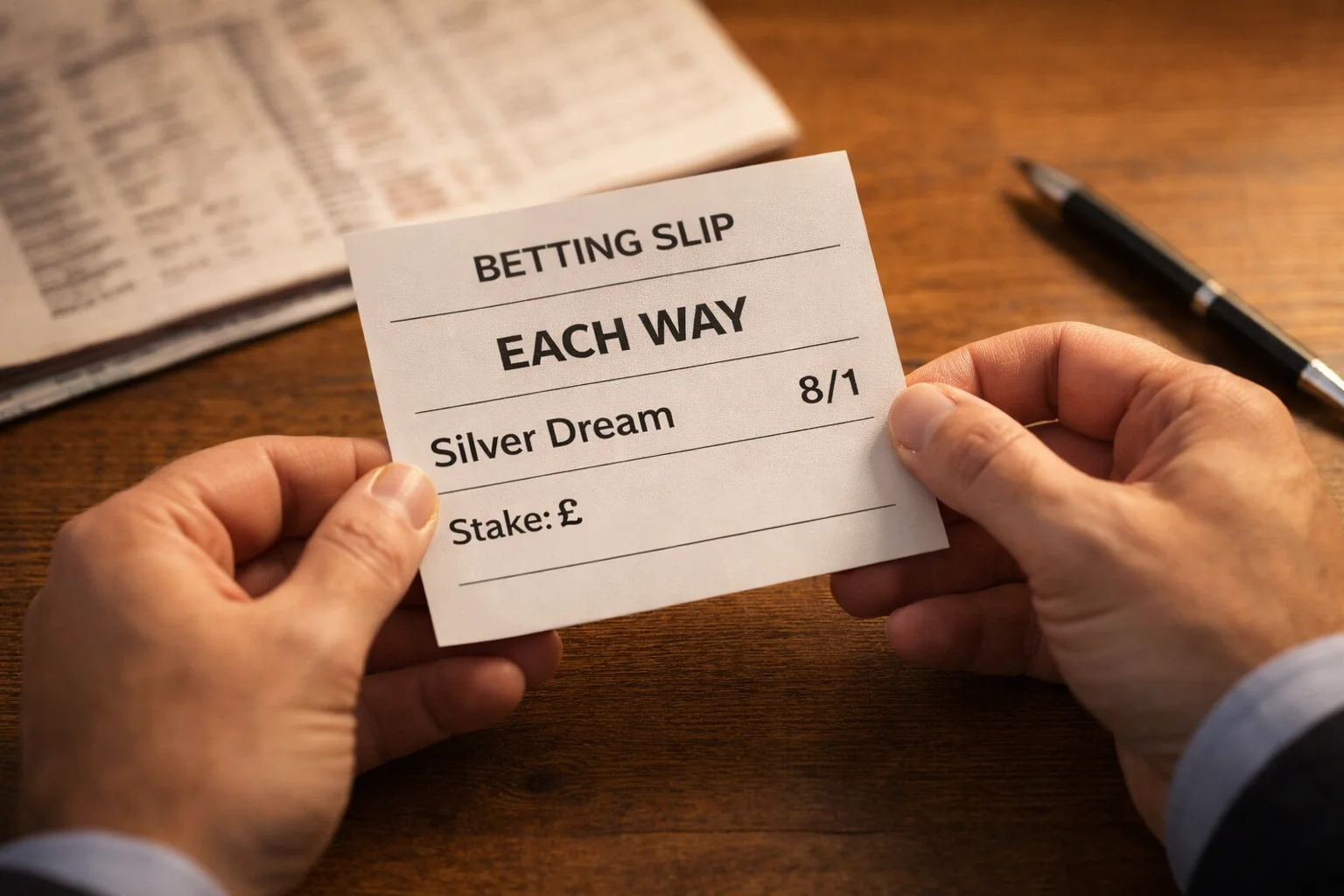
Place terms vary by field size and race type, forming the foundation of each-way calculations. Standard terms work as follows:
| Runners | Places Paid | Odds Fraction |
|---|---|---|
| 2-4 | Win only (no E/W) | N/A |
| 5-7 | 1st, 2nd | 1/4 |
| 8-11 | 1st, 2nd, 3rd | 1/5 |
| 12-15 | 1st, 2nd, 3rd | 1/4 |
| 16+ | 1st, 2nd, 3rd, 4th | 1/4 |
| Handicaps 16+ | 1st, 2nd, 3rd, 4th | 1/4 |
The fraction determines what portion of the full odds the place bet pays. At 10/1 with 1/4 odds, the place portion pays 10/4 (2.5/1). At the same 10/1 with 1/5 odds, the place pays 10/5 (2/1). This difference matters significantly when assessing value, particularly for horses you expect to place but not win.
Each-Way Calculation Example
You place a £10 each-way bet at 8/1 on a race with 12 runners (1/4 odds, 3 places).
Total stake: £10 × 2 = £20 (£10 win, £10 place)
If the horse wins: Win returns £10 × 8 + £10 = £90. Place returns £10 × 2 + £10 = £30. Total: £120.
If the horse places (2nd or 3rd): Win portion loses £10. Place returns £10 × 2 + £10 = £30. Net result: +£10 profit.
If the horse finishes 4th or worse: Both portions lose. Total loss: £20.
Handicaps with large fields often attract extra places promotions, where bookmakers pay four, five or even six places instead of the standard four. These offers can shift the value proposition considerably, particularly for outsiders where the place odds provide meaningful returns. Analysing whether extra places genuinely improve expected value requires comparing the enhanced terms against the horse's realistic placing probability.
Each-way betting shines for horses at longer odds where the place portion delivers a meaningful return even if the win eludes them. For short-priced horses, the place portion often returns so little that the win bet alone makes more sense. A horse at 2/1 in an eight-runner race pays just 2/5 for a place, meaning a £10 place stake returns only £14. Whether that insurance justifies the additional outlay depends on your assessment of the horse's winning chances versus its placing chances.
Multiple Bets: Doubles, Trebles and Accumulators
Multiple bets combine selections across different races into a single wager where the returns from one winner roll onto the next. A double links two selections, a treble links three, and accumulators extend to four selections or more. Modest stakes can generate substantial payouts when several winners combine, though a single loser typically sinks the entire bet.
The mathematics involve multiplication. If you back three horses at 2/1, 3/1 and 4/1 in a treble, the combined odds are 3.00 × 4.00 × 5.00 = 60.00 in decimal terms, equivalent to 59/1. A £5 stake returns £300 if all three win.
Each-way multiples introduce additional complexity. Each selection has win and place components, generating multiple combinations that can pay out. This makes each-way accumulators more forgiving than win-only versions, though the returns are correspondingly smaller.
Forecasts and tricasts differ from accumulator logic. A forecast requires you to predict the first and second finishers in a single race, either in exact order or any order. A tricast extends this to the first three finishers. Returns can be substantial for difficult combinations but vary based on the starting prices involved.
Best Odds Guaranteed typically applies to each leg of an accumulator individually. However, some bookmakers apply BOG restrictions to accumulators beyond a certain number of legs or above certain stake levels. The house edge compounds with each additional leg, which explains why bookmakers enthusiastically promote them.
Best Odds Guaranteed: The Safety Net for Fixed Odds Punters
Best Odds Guaranteed has transformed fixed odds betting more than any other innovation in recent decades. The premise is simple: take your fixed price, and if the starting price is higher, the bookmaker pays you at SP instead. You capture the upside of drifting horses while protecting against shortening favourites. For race-day betting on UK and Irish racing, BOG has become the standard rather than the exception.
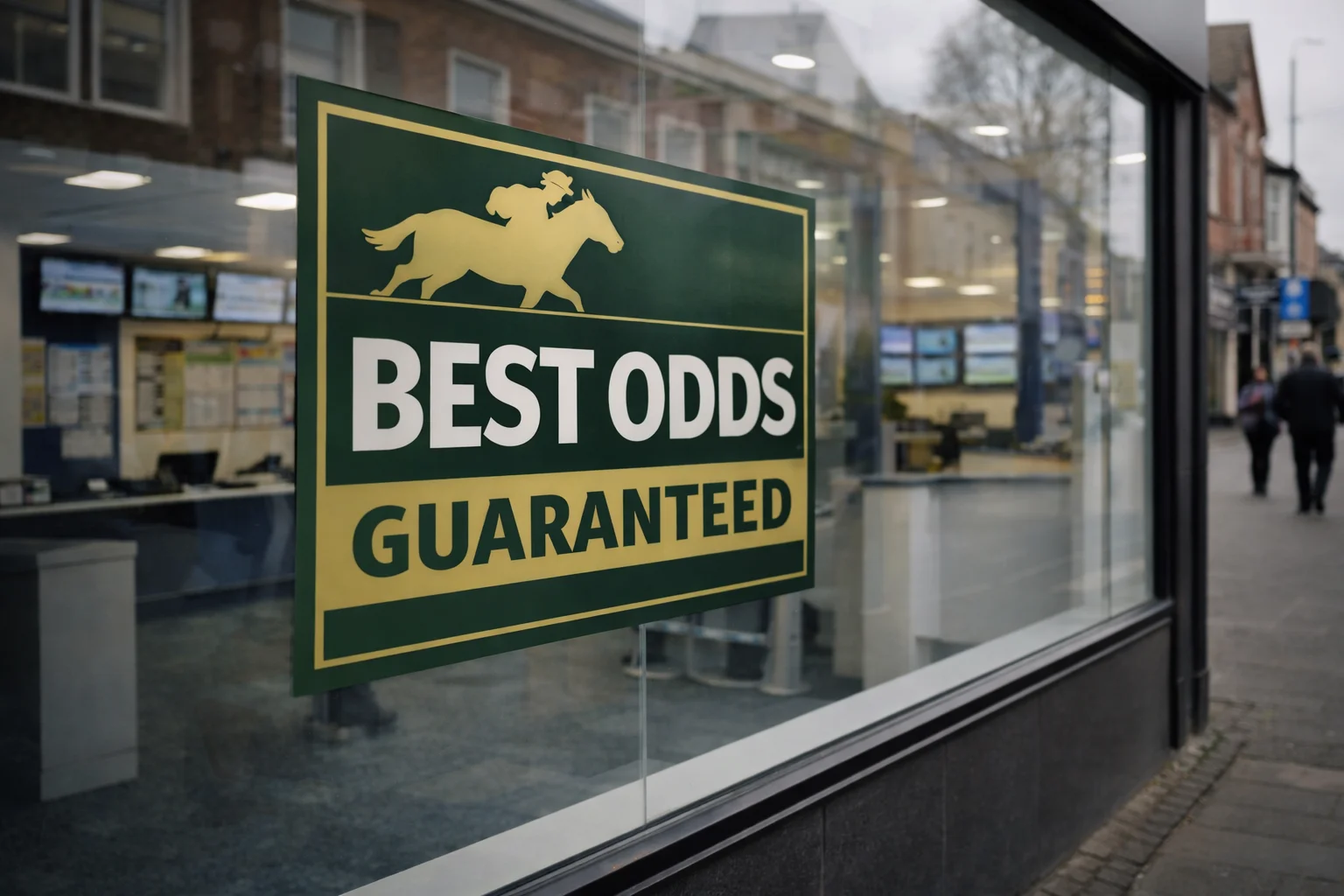
The mechanics work automatically at most bookmakers. You place your bet at the displayed fixed odds, and at settlement, the system compares your price to the SP. Whichever is higher applies. No action required on your part, no special markets to select, no promotional codes to remember. The only caveat is understanding the specific terms each bookmaker applies.
BOG timing varies between bookmakers. Some apply best odds from the first morning prices around 8am, others from 9am or 10am. This matters if you are an early morning punter looking to lock in prices before the market moves. Check your bookmaker's specific start time, particularly for early afternoon racing where the cut-off might affect your bet.
The scope of BOG coverage differs too. Most bookmakers apply it to UK and Irish racing, often including all-weather fixtures at Newcastle, Wolverhampton, Chelmsford and the other synthetic tracks. International racing may be excluded or covered only for selected meetings. Ante-post bets, placed days or weeks before a race, almost never qualify for BOG protection, falling outside the standard terms.
The market context makes BOG more valuable than ever. Total betting turnover on British racing fell 6.8% in 2024 compared with the previous year, continuing a trend that has seen overall volumes drop 16.5% since 2022 according to BHA Racing Reports. "I have no doubt that the drop in betting revenue was headed by the impact of affordability checks," noted Richard Wayman, the BHA's Director of Racing. In this environment of declining volume, bookmakers compete intensely on value propositions, and BOG remains a key differentiator.
BOG eliminates the main downside of taking early fixed odds. With this protection in place, there is rarely a reason to bet at SP on race-day markets unless your bookmaker excludes the race or bet type from their guarantee.
Accumulator treatment varies. Some bookmakers apply BOG to each leg of an accumulator, others cap it at four or five selections, and a few exclude multiples entirely or apply stake limits. The differences can significantly affect returns on winning accas, making the fine print worth reading before placing substantial accumulator stakes. When several horses drift, the compounded effect of getting SP on each leg transforms a good payout into an exceptional one.
Rule 4 Deductions: What Happens When Horses Withdraw
Rule 4 adjusts winning bets when a horse is withdrawn from a race after betting has begun but before the off. The principle is simple: if a fancied horse is scratched, the remaining horses have improved chances of winning, so the odds taken on them no longer reflect the true probability. Rule 4 deductions restore balance by reducing your payout proportionally based on how short the withdrawn horse was.
The deduction scale is fixed, based on the odds of the non-runner at the time of withdrawal:
| Non-Runner Odds | Deduction |
|---|---|
| 1/9 or shorter | 90p in £1 |
| 2/11 to 1/7 | 85p |
| 1/4 to 2/9 | 80p |
| 2/7 to 1/3 | 75p |
| 4/11 to 2/5 | 70p |
| 4/9 to 8/15 | 65p |
| 8/13 to 4/6 | 60p |
| 4/5 to 20/21 | 55p |
| Evens to 6/5 | 50p |
| 5/4 to 6/4 | 45p |
| 13/8 to 7/4 | 40p |
| 15/8 to 9/4 | 35p |
| 5/2 to 3/1 | 30p |
| 10/3 to 4/1 | 25p |
| 9/2 to 6/1 | 20p |
| 13/2 to 9/1 | 15p |
| 10/1 to 14/1 | 10p |
| Over 14/1 | No deduction |
When multiple horses are withdrawn, deductions combine up to a maximum of 90p in the pound. If two horses pull out with deductions of 30p and 25p, the combined deduction is 55p, not applied separately to each portion of your winnings. The cap protects punters from scenarios where several fancied runners are scratched and virtually no payout would remain.
Rule 4 Calculation Example
You backed a horse at 5/1 with a £20 stake. Before the race, the 3/1 favourite is withdrawn.
The Rule 4 deduction for a 3/1 non-runner is 30p in the pound.
Normal winning returns: (£20 × 5) + £20 = £120
Profit element: £100. Deduction: £100 × 0.30 = £30
Adjusted return: £120 - £30 = £90
Your stake is returned in full; the deduction applies only to winnings.
Rule 4 applies equally to win and place portions of each-way bets, calculated independently for each component. The timing of withdrawal matters too. If a horse is declared a non-runner before the market opens on race morning, no Rule 4 applies because prices were never set with that horse included. Withdrawals after betting opens but early enough for prices to fully adjust may also avoid deductions, though this depends on bookmaker policy and the specific timing.
The frustration Rule 4 causes is real, particularly when a solid winner has its return slashed because a different horse pulled out. Understanding that the rule exists to maintain market integrity rather than to penalise punters helps, though the sting of a reduced payout never entirely disappears.
Non-Runners and Your Bet: Fixed Odds vs Ante-Post
When your selected horse does not run, what happens to your bet depends entirely on when you placed it. The distinction between day-of-race fixed odds and ante-post betting determines whether you receive your stake back or lose it entirely, a critical difference that catches out many punters unfamiliar with ante-post terms.
For standard fixed odds bets placed on race day or after overnight declarations are published, a non-runner means a void bet and returned stake. Your money comes back, no questions asked, no harm done beyond the inconvenience and missed opportunity. The race simply becomes one you did not bet on.
Ante-post bets operate differently. Place a wager weeks before a major race, and the enhanced odds reflect the uncertainty over whether your horse will even make it to the start. If it is withdrawn for any reason, injury, unsuitable going, illness, or trainer decision, your stake is lost. The risk of non-participation is precisely why ante-post prices are longer than day-of-race prices for the same horses.
Non-Runner No Bet (NRNB) promotions offer protection for specific ante-post markets, typically big races like the Grand National or Cheltenham Festival. If your horse does not run under NRNB terms, your stake is returned. The catch is that NRNB prices are generally shorter than standard ante-post odds, reflecting the removed risk. Whether the insurance is worth the price reduction depends on your risk tolerance and the perceived likelihood of withdrawal.
The relationship between non-runners and Rule 4 applies only to race-day betting. If a horse is withdrawn after you have placed your fixed odds bet on a different runner, your bet stands but may face a Rule 4 deduction as discussed above. If your own selection becomes a non-runner, the bet voids and Rule 4 is irrelevant.
Understanding these distinctions prevents expensive surprises. Ante-post betting on the Cheltenham Gold Cup in January offers attractive prices but carries genuine risk that your horse might not run in March. Waiting until race week reduces the odds available but ensures stake return if the worst happens. Most punters blend both approaches, taking selective ante-post positions on robust selections while saving day-of-race betting for horses with any injury concerns or ground sensitivities.
Fixed Odds vs Tote: Bookmaker Prices Against Pool Betting
Pool betting operates on fundamentally different principles from fixed odds. Instead of the bookmaker setting prices, all stakes go into a pool and the payout depends on how that pool divides among winning tickets. The Tote, Britain's pool betting operator, offers an alternative to fixed odds that sometimes delivers higher returns and sometimes disappoints, with no way to know which until after the race.
The UK has a long history with pool betting, and the Tote has evolved considerably since its early days. Under new ownership since 2019, the UK Tote Group has returned substantial sums to racing through commercial arrangements. According to UK Tote Group figures, World Pool has contributed more than £65 million to British and Irish racing since its launch, demonstrating the scale of pool betting's role in funding the sport.
World Pool connects UK betting pools with those in Hong Kong, Japan and other major racing jurisdictions, creating vastly larger liquidity than domestic pools alone could generate. On featured races, analysis suggests Tote Win payouts beat the SP in 72% of World Pool races, making the comparison with fixed odds less straightforward than simple assumptions might suggest.
| Feature | Fixed Odds | Tote/Pool |
|---|---|---|
| Price certainty | Locked at bet placement | Unknown until after race |
| Payout structure | Set by bookmaker margin | Determined by pool distribution |
| Best for favourites | Usually better with BOG | Tote Guarantee protects very short prices |
| Best for outsiders | Depends on market | Can pay significantly more on ignored runners |
| Complexity | Simple calculation | More bet types (Placepot, Jackpot, etc.) |
The financial relationship between betting and racing matters here. The Horserace Betting Levy Board collects approximately 0.7% of betting turnover through the Levy system, one of the lowest return rates from betting to racing in the developed racing world. "Levy yield for the 12 months to 31 March 2025 reached almost £109m, the fourth successive year of increase and the highest since the Levy collection reforms of 2017," observed Alan Delmonte, Chief Executive of the HBLB, in the Board's 2024-25 Annual Report.
On-course pool betting has seen healthy growth, with Britbet courses reporting turnover of £73.6 million in 2024, up 26% since 2018. For racegoers, the Tote windows offer an alternative experience to negotiating with on-course bookmakers, with the Placepot and other exotic bets providing lower-stake entertainment across entire race cards.
The practical choice between fixed odds and Tote often comes down to price visibility. Fixed odds let you calculate your potential return before committing. Pool betting requires faith that the final dividend will be acceptable. For punters who value certainty, fixed odds with BOG remain the default. For those seeking potential upside on ignored runners or enjoying the social aspect of pool games, the Tote has genuine appeal.
Betting Exchanges: A Different Approach to Racing Markets
Betting exchanges match punters against each other rather than against a bookmaker. Betfair, the dominant exchange, allows you to either back a horse or lay a horse, effectively playing bookmaker yourself. This peer-to-peer structure eliminates the traditional overround and often produces sharper prices than bookmaker markets.
The exchange model works through a commission system rather than built-in margin. When you win, Betfair takes a percentage of your profit, typically 5% at standard rates. The absence of traditional margin means that odds are generally closer to true probabilities.
Betfair Starting Price offers a particularly compelling alternative to Industry SP. As noted earlier, exchange starting prices consistently outperform their traditional counterparts, making BSP a default choice for punters who prefer to settle at the off rather than lock in early prices.
The lay side of exchanges enables strategies impossible with traditional bookmakers. You can effectively play bookmaker on a horse you fancy to get beat. Trading, moving between back and lay positions as prices change, allows skilled operators to lock in profits regardless of race outcome.
In-play betting on exchanges offers depth that most bookmakers cannot match. Exchange liquidity on racing often exceeds bookmaker in-running markets. The learning curve is steeper than for traditional betting, but exchanges offer flexibility and value that complements fixed odds betting rather than replacing it.
When to Take the Price: Timing Your Fixed Odds Bets
Timing matters in horse racing betting, and understanding when to lock in your odds separates thoughtful punters from those who simply accept whatever number appears on screen. Early morning markets, race-day movements and the final furlong before the off all present different opportunities depending on your information and expectations.

Early prices emerge when bookmakers post their opening assessments, typically between 8am and 10am for afternoon racing. These prices reflect overnight analysis, stable intelligence gathered through trade channels, and initial assessments of likely market interest. Taking early prices makes sense when you believe money will arrive for your selection, pushing the odds shorter by post time. The classic example is the well-backed horse whose morning price of 8/1 contracts to 5/1 by the off.
Track patterns across different meeting types. Data from the 2025 BHA Racing Report shows that turnover on Premier fixtures grew 1.1% while Core fixtures declined 8.1% year-on-year. This concentration of money on marquee meetings means greater price volatility and more opportunity to lock in value on horses that will attract late support.
The types of races most prone to significant market moves include handicaps where stable information is valuable, major meeting feature races attracting recreational money late in the day, and races with multiple fancied runners where support needs to concentrate somewhere. Smaller meetings with less betting interest tend to show more stable prices, making the timing of your bet less critical.
With BOG protection, the timing question simplifies considerably. You can lock in morning prices without fear of missing a drift, since the bookmaker pays whichever is higher. The tactical consideration shifts from whether to take the price to whether your selection qualifies under the specific BOG rules, including the morning cut-off time and any market restrictions.
Conversely, waiting for SP or taking late prices makes sense when you expect horses to drift. Unfashionable trainers, first-time headgear experiments, horses with recent poor runs that you believe misrepresent current form, all fit this profile. The market often overcorrects against these runners, creating value at the off that was not present in the morning.
Developing a feel for market movements takes observation over many meetings. Watch how prices shift through the morning, note which trainers attract money regardless of form, pay attention to stable information sources. This pattern recognition improves your timing decisions and complements the formal analysis of form and conditions that underpins selection.
The UK Betting Landscape: Market Trends and What They Mean for Punters
The UK horse racing betting market has experienced significant turbulence in recent years, with trends that affect both bookmakers and punters. Total betting turnover on British racing fell 4.3% in 2025, extending a decline that has seen volumes drop 10.3% since 2023 according to the 2025 BHA Racing Report. The first quarter of 2025 was particularly challenging, with turnover falling 9% compared with the same period in 2024.
The primary driver of this decline is the impact of affordability checks introduced by the Gambling Commission. "Over the next five years affordability checks will directly cost the racing industry £250 million," warned Martin Cruddace, Chief Executive of Arena Racing Company, in correspondence cited by the Racecourse Association. Industry estimates suggest more than £1 billion in online betting turnover on British racing has been lost since 2021.
What does this mean for individual punters? The competitive landscape among bookmakers has intensified as they fight for a shrinking pool of active bettors. BOG, enhanced place terms, free bet promotions and sign-up offers remain aggressive as operators compete to attract and retain customers.
The pattern of turnover decline is not uniform across meeting types. Premier fixtures, the showcase meetings featuring top-quality racing and higher prize money, have seen turnover grow modestly at 1.1% even as Core fixtures declined 8.1%. Money is concentrating on the biggest events while everyday racing struggles to maintain interest. This has implications for betting strategy: the largest, most liquid markets occur on Premier days, while Core fixtures may offer less volatility but also less opportunity for those seeking to exploit early price movements.
Spring 2026 sees the racing calendar in full swing, with the Cheltenham Festival behind us and the flat turf season building toward its summer peaks. The Grand National meeting at Aintree, the Guineas at Newmarket, Royal Ascot in June — all draw the concentrated attention that defines Premier racing. For fixed odds punters, these meetings represent the most competitive betting environments, where BOG protection and a shop-around approach to odds comparison deliver maximum benefit.
Racing's funding through the Levy system continues to function despite turnover pressure, though the sustainability of current arrangements faces questions. The industry's adaptation to changing regulatory requirements continues, with outcomes that will shape betting conditions for years to come.
Frequently Asked Questions About Fixed Odds Betting
What is the difference between fixed odds and starting price in horse racing?
Fixed odds are the price you accept when placing your bet, locked in regardless of subsequent market movements. If you back a horse at 7/1 on Monday morning and it wins on Saturday, you receive 7/1 whether the starting price ends up at 4/1 or 12/1. Starting price is the official odds at the moment the race begins, determined by independent SP reporters who record on-course bookmaker prices.
The strategic choice depends on your expectations for price movement. If you believe your horse will shorten, taking fixed odds locks in value. If you expect a drift, waiting for SP might deliver better returns. Best Odds Guaranteed has largely resolved this dilemma by paying whichever is higher, your fixed price or the SP.
How does Best Odds Guaranteed work in UK horse racing?
Best Odds Guaranteed pays you the better of your fixed odds or the starting price. Take a price at the time of betting, and if the SP is higher, your bet settles at SP instead. If the SP is lower, you keep your original fixed price. Settlement happens automatically.
BOG typically applies to UK and Irish horse racing, starting from a specified morning time such as 8am, 9am or 10am depending on the bookmaker. It covers day-of-race fixed odds bets but not ante-post wagers. Some bookmakers exclude certain markets or accumulator bets beyond a certain number of selections.
What happens if a horse is withdrawn after I placed my fixed odds bet?
If your selected horse is withdrawn, your stake is returned and the bet is void. This applies to standard day-of-race fixed odds bets. If a different horse is withdrawn from the same race, your bet stands but may face a Rule 4 deduction based on how short the withdrawn horse was.
Ante-post bets operate differently. A withdrawal typically means you lose your stake entirely, as the enhanced odds reflect this risk. Non-Runner No Bet promotions, offered on selected ante-post markets, protect against this by returning stakes if your horse does not run.
