
On-Course Betting Odds: Racecourse Bookmakers vs Online
 Available in US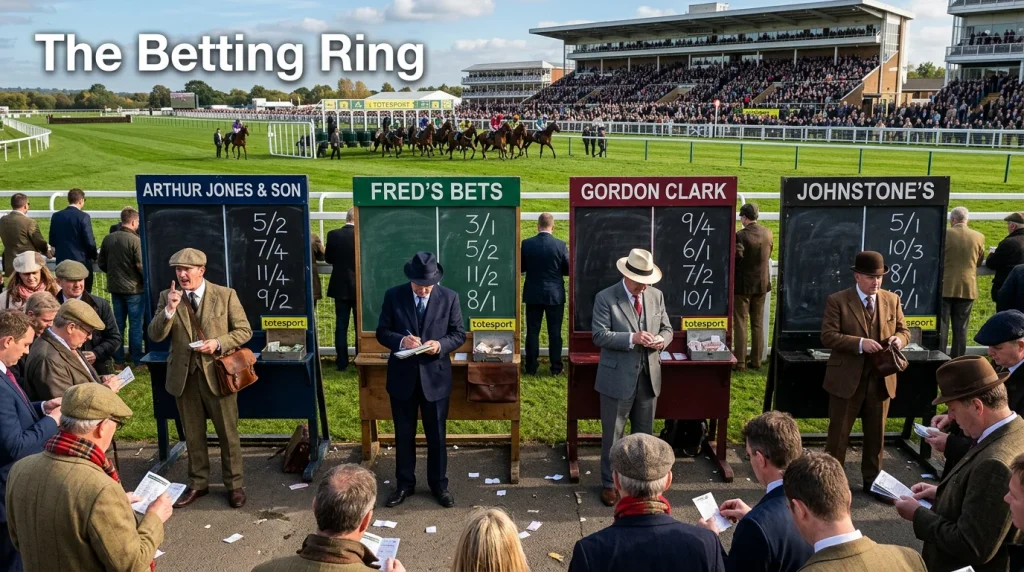
This guide explains how on-course bookmakers operate, covers Tote windows at tracks, compares your betting options, and offers practical tips for maximising trackside betting effectiveness. The racecourse environment rewards preparation and awareness.
On-Course Bookmakers: Trackside Odds vs Online Prices
Rails bookmakers operate along the track perimeter, offering fixed odds on boards displayed above their pitches. Prices update continuously as money arrives—you can literally watch odds change as betting patterns shift. This visual market information isn’t available remotely; trackside observation reveals market sentiment in real time.
The Tattersalls ring (sometimes called the Members’ ring) houses the majority of on-course bookmakers at most tracks. Prices vary between bookmakers—the same horse might be 5/1 with one layer and 11/2 with another standing ten metres away. Walking the ring to compare prices before betting captures better odds that casual punters miss.
Price negotiation is possible with on-course bookmakers, particularly for larger stakes. Unlike online operators whose prices are take-it-or-leave-it, trackside bookmakers might offer a point or two extra to secure significant bets. The skill lies in knowing when to push and when to accept displayed prices—experience reveals which bookmakers are willing to negotiate.
Cash betting remains the traditional on-course method, though many bookmakers now accept card payments or operate digital systems. Carry sufficient cash for your intended betting to avoid queuing for cash machines or missing opportunities while transactions process.
Collecting winnings requires returning to the bookmaker who accepted your bet—each operates independently, so you can’t collect from one what you placed with another. Note where you’ve bet, especially if visiting multiple pitches, and collect promptly; bookmakers may pack up shortly after the final race.
Tote Windows at Racecourses
Tote windows at racecourses connect to the same pool systems available online, but the on-course experience differs. You’re betting into pools that include trackside money alongside remote bets—the combined pool determines dividends regardless of where individual wagers originated.
On-course pool betting has grown significantly. According to Britbet data, on-course pool turnover reached £73.6 million—an 8.5% increase from the previous year. This growth reflects renewed interest in pool betting’s unique characteristics, particularly for exotic bets where pool dividends can exceed fixed odds alternatives.
Queue timing matters at Tote windows. Popular races attract crowds, and window service takes time. If you’re betting close to the off, join queues early or use mobile Tote betting to avoid missing races while waiting. Conversely, quiet periods between races offer relaxed service with opportunity to ask staff questions about bet types or pool information.
Collecting Tote winnings is straightforward—take your winning ticket to any Tote window on course. Dividends display on screens after races, so you’ll know what you’ve won before joining the collection queue. Large wins may require additional verification; carry identification for significant payouts.
Tote guarantees apply to on-course bets just as they do online. If the pool dividend falls below the guaranteed minimum, you receive the better amount. This protection makes on-course Tote betting particularly attractive when backing short-priced horses where pool concentration might otherwise produce disappointing dividends.
Comparing Your On-Course Options
Fixed odds from on-course bookmakers suit punters who want price certainty and immediate visual market feedback. You know exactly what you’ll receive if your horse wins; no waiting for dividend calculation. The trade-off is accepting whatever price is available—no Best Odds Guaranteed typically applies to on-course betting.
Tote betting suits exotic wagers—forecasts, tricasts, placepots—where pool liquidity produces more stable dividends than on-course bookmaker odds might suggest. For win and place bets on well-backed horses, Tote Guarantee ensures competitive returns even if the pool itself would disappoint.
Mobile betting via online bookmaker apps offers BOG protection unavailable from on-course bookmakers. If you expect your selection to drift, taking the on-course morning price through an app captures that advantage with SP improvement protection. The blend of trackside atmosphere with digital promotional value optimises both experience and returns.
Timing considerations vary between options. On-course bookmakers offer real-time price formation visible on their boards; Tote windows connect to pools that won’t finalise until betting closes; mobile apps let you lock in prices anytime with promotional protection. Match your timing strategy to whichever option you’re using.
Tips for Effective Track Betting
Getting best prices requires walking the ring. Never assume the first bookmaker you approach offers the best price—compare at least three or four boards before betting. The minute spent checking prices might add a point to your odds, a meaningful improvement over hundreds of raceday bets.
Paddock analysis provides information unavailable remotely. Watch horses being saddled and walking around the parade ring; assess their condition, demeanour, and physical appearance. This visual inspection—when you know what to look for—reveals fitness, anxiety, or wellbeing that form figures cannot capture.
Set a budget before entering the racecourse and stick to it. The exciting atmosphere can encourage over-betting; knowing your limit in advance prevents enthusiasm from becoming regret. The goal is enjoyment with profitable betting as a bonus—not the other way around.
Plan your day around key races if combining betting with raceday experience. Identify which races you’ll prioritise for serious betting, which for casual entertainment, and which you’ll skip to rest or eat. Trying to bet every race intensively exhausts concentration and depletes bankrolls unnecessarily.
Plan your racecourse visits with betting strategy in mind. Identify which races suit which betting channels, set your budget before arrival, and know where to find each betting option at your chosen course. This preparation transforms raceday from chaotic reactions into structured opportunity capture—enjoying the atmosphere while betting with discipline and purpose.
The trackside experience offers educational value beyond individual betting returns. Watching how markets form, observing which horses attract late money, seeing how paddock condition correlates with performance—this learning informs your remote betting too. Time at the racecourse develops racing intuition that form figures alone cannot teach.
