
Horse Racing Odds Movement: Understanding Steamers and Drifters
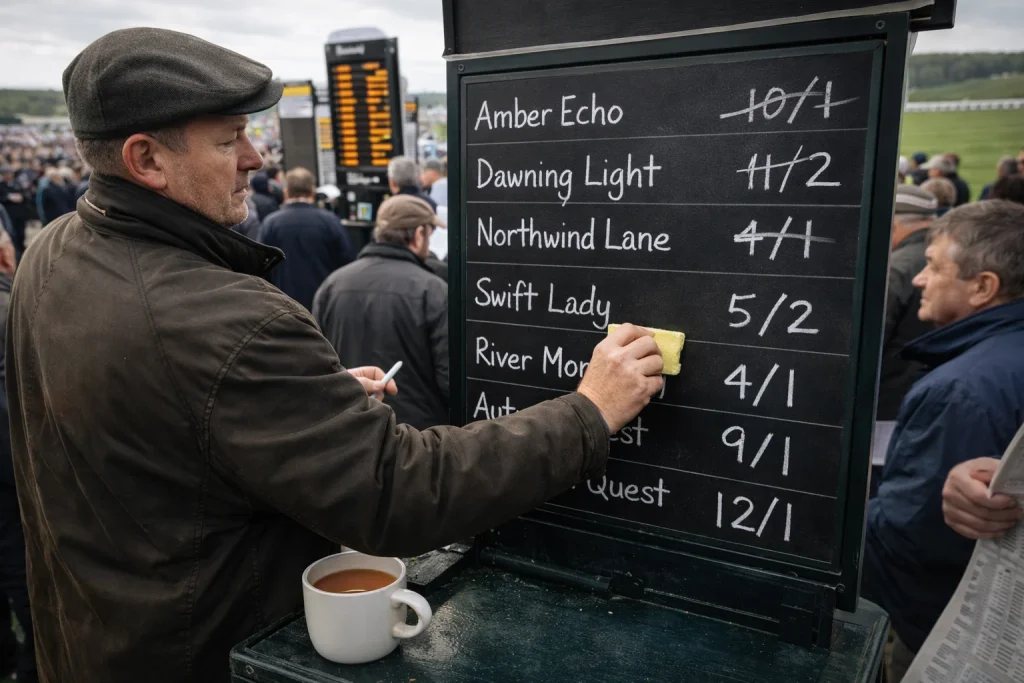
Horse racing odds shift constantly between market opening and race-off. A horse available at 10/1 in the morning might be 6/1 by post time—or it might drift to 14/1. Understanding why prices move, and what those movements signal, gives informed bettors an edge over those who simply accept whatever price they find.
The terminology is straightforward. Steamers are horses whose odds shorten as money pours in, contracting from longer to shorter prices. Drifters do the opposite—their odds lengthen as the market moves against them. Both patterns carry implications for value and for the information embedded in market movements.
This guide explores why odds move, how to identify steamers and drifters early, and whether these patterns offer opportunities for strategic betting. The market isn’t random; it responds to money, information, and conditions. Reading that response is a skill worth developing.
Why Odds Move
Money drives odds movements. When significant sums back a horse, bookmakers shorten its price to limit their liability and lengthen prices elsewhere in the field to balance their book. The reverse occurs when money arrives for other runners—your selection’s odds extend as it becomes relatively less popular.
Information flow creates many of these movements. Stable confidence, paddock reports, jockey bookings, and work-watching all generate knowledge that reaches different market participants at different times. Professional bettors often act on information earlier than recreational punters, moving prices before the broader public realises what’s happening.
The volume available has shrunk, making individual betting activity more impactful. Average betting turnover per race dropped approximately 8% year-on-year in 2026/25 compared with the previous season, continuing a multi-year decline. With less total money in markets, the same bet size creates larger price movements than it would have in more liquid times.
Weather changes trigger predictable movements. When morning sunshine gives way to afternoon rain, ground-dependent horses see immediate odds adjustments. Heavy-ground specialists shorten; those needing fast going drift. Watching weather forecasts sometimes lets you anticipate these movements before they occur.
Bookmaker liability management also causes movements unconnected to genuine information. If one bookmaker has taken disproportionate money on a specific horse, they’ll cut its price aggressively—sometimes below fair value—while competitors may not follow immediately. These technical movements create temporary arbitrage opportunities for alert bettors.
Steamers Explained
A steamer attracts sustained money that contracts its price, sometimes dramatically. Opening at 8/1 and closing at 3/1 represents a significant steam—the market has completely reassessed this horse’s chances based on whatever information drove the money.
Identifying steamers early requires watching market movements rather than just checking prices periodically. Dedicated services track price changes across bookmakers, alerting subscribers when specific patterns emerge. Even without subscriptions, checking prices at multiple points through the morning reveals trends that single snapshots miss.
The causes of steaming vary. Strong stable confidence might drive early professional money. A jockey booking might signal genuine intent. Work reports might indicate exceptional fitness. Or the market might simply be correcting an initially incorrect price. Distinguishing genuine information from false moves requires experience and contextual knowledge.
Betting steamers carries a timing dilemma. Back too early, and you might catch the price before it moves—capturing all the value. Back too late, and the steaming has already extracted the value—you’re paying a shorter price that may reflect fair value rather than bargain odds. The skill lies in identifying genuine steam early enough to benefit.
BOG partially protects against steamer timing. If you back at 8/1 with Best Odds Guaranteed and the price shortens to 4/1 by race-off, you keep your 8/1. But if you back at 4/1 after the steam has occurred, BOG offers no improvement—the value has already moved. The feature rewards early identification rather than late following.
Drifters Explained
Drifters see their odds lengthen as the market moves against them. A horse opening at 5/1 that reaches 10/1 by race-off has drifted badly—the market no longer rates its chances as highly as initial pricing suggested.
The causes of drifting mirror steaming in reverse. Negative paddock reports, concerns about ground suitability, jockey switches, or simply money arriving for rivals all push prices out. Sometimes the drift reflects genuine insider knowledge that something is wrong; other times it reflects nothing more than public preference shifting elsewhere.
Do drifters offer value? The question divides opinion. One view holds that drifting prices represent the market correctly downgrading overpriced horses—following smart money that’s identified problems you haven’t. The opposing view argues that drifting creates value for contrarians willing to back horses the crowd has abandoned, capturing inflated prices that overcorrect the initial assessment.
Statistical evidence on drifter performance varies by study. What’s clear is that blind drifter-following doesn’t guarantee profit. The value—if it exists—emerges from identifying which drifts represent overcorrection versus which reflect genuine information about diminished chances. This requires judgement that simple price-watching can’t provide.
Market conditions affect drifter patterns. The BHA Racing Report 2026 noted significant differences between race types: turnover on Premier fixtures grew 1.1% while Core fixtures declined 8.1%. Major meetings attract more sophisticated money; smaller meetings may show more random drifting as thinner markets respond erratically to modest bet sizes.
Late drifts warrant particular attention. A horse steady at 4/1 all morning that suddenly moves to 6/1 in the final fifteen minutes suggests new information has reached the market. That information might be paddock-related—the horse isn’t moving well, or shows signs of distress—or it might be jockey body language, or simply large money arriving for a rival. The timing of the drift often hints at its cause.
Trading Odds Movements
Exchange users can profit from odds movements regardless of race outcomes. Back a horse at 10.0 early, then lay it at 6.0 after a steam, and you’ve locked in profit whether it wins or loses. The price movement itself becomes the source of returns, not the horse’s performance.
This trading approach requires correctly anticipating market direction. Back a horse expecting a steam, and if it drifts instead, you face a loss or must carry the position to race-off hoping your original selection wins. The skill requirement is substantial—you need to identify probable movers before they move.
BOG creates interesting hedging possibilities for traditional bettors. Back with a fixed-odds bookmaker at an early price with BOG protection. If the horse steams, you hold excellent odds locked in. If it drifts, you receive SP anyway—the drift becomes your friend. This asymmetric exposure favours the bettor: steamers stay locked, drifters get SP. Not quite trading, but it captures similar dynamics.
In-play movements offer another trading dimension. Prices move dramatically during races as positions change—leaders shorten, backmarkers drift, horses under pressure see immediate price spikes. Trading these movements requires speed, platform familiarity, and strong understanding of how races unfold. It’s not for beginners.
Odds movements encode information—money arriving, confidence shifting, conditions changing. Reading these movements adds a dimension to race analysis that static form study misses. The horse that steams from 8/1 to 4/1 carries a story; so does the one that drifts from 5/1 to 12/1.
Whether you follow steamers, oppose drifters, or simply use movement patterns to time your betting, understanding why prices change improves decision-making. The market isn’t always right, but it’s always telling you something. Listen to what it says, then decide whether you agree.